
From a real estate concept to a structured PropTech platform.
How Zolvify worked as the product strategy and engineering arm for Trela, turning an informal marketplace concept into a multi-sided platform for project inventory, agents and property seekers.
Case Study at a Glance
A full product lifecycle, not a feature-development engagement.
The engagement covered product strategy, information architecture, data modelling, UX/UI, engineering, QA, feedback-driven rescoping and production deployment.
Client
Trela - Real Estate Technology
Product
Multi-sided PropTech & agent enablement platform
Users
Platform Admins, Agents / Agencies, Property Seekers
Zolvify role
Product strategy + architecture + full-stack delivery
The Product Challenge
The hard problem was not property listings. It was the operating model behind them.
The initial concept was broadly a real-estate marketplace. As discovery progressed, it became clear that the platform needed governed inventory, agent workflows, project-level structures and consumer discovery to work as one system.
Unstructured property data
A flat property form could not adequately represent developer projects with multiple towers, floors, unit configurations and different attributes.
Compliance and trust
Publishing and verification needed explicit governance. A fast but uncontrolled publishing model could undermine platform trust and compliance.
Disconnected ecosystems
Developer-backed projects, broker resale inventory and consumer lead generation had to be connected rather than treated as separate products.
Ambiguous product requirements
The client had domain observations and a broad vision, but many operational rules, data relationships and workflows still needed to be defined.
Discovery & Product Strategy
We converted an informal brief into a product blueprint.
Instead of translating ambiguous requirements directly into tickets, Zolvify worked through the personas, domain entities, workflows, rules and system boundaries first.
Define the personas
Structured the platform around three synchronized experiences: Super Admin, Agent/Agency and Property Seeker.
Define the domain
Modelled projects, towers, floors, flats, agents, listings, leads and master data as connected product entities.
Define governance
Introduced controlled publishing, verification states, reusable master data and clear role-based responsibilities.
Product Solution
Three connected product surfaces, one data core.
Each persona gets the tools needed for its job while the underlying data remains governed and consistent.
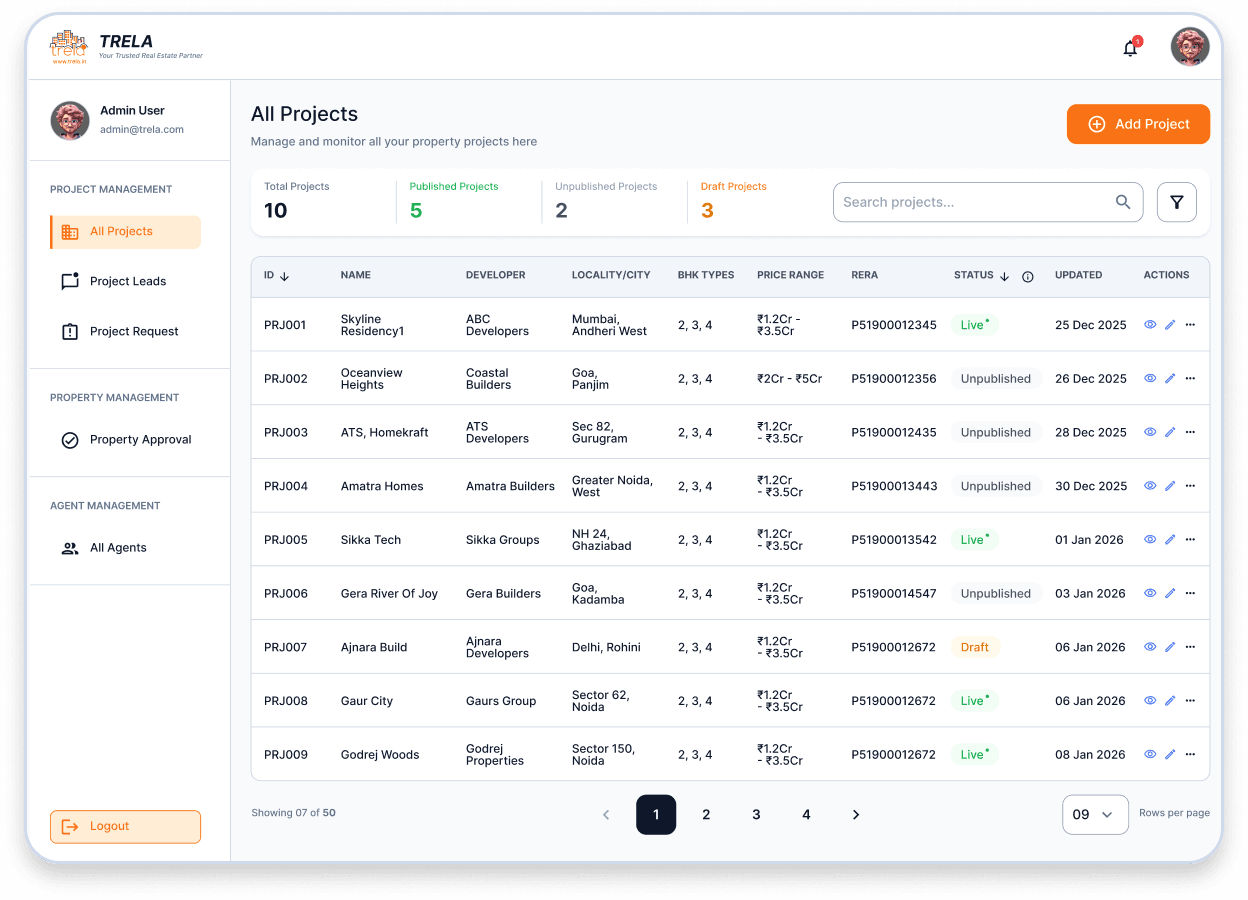
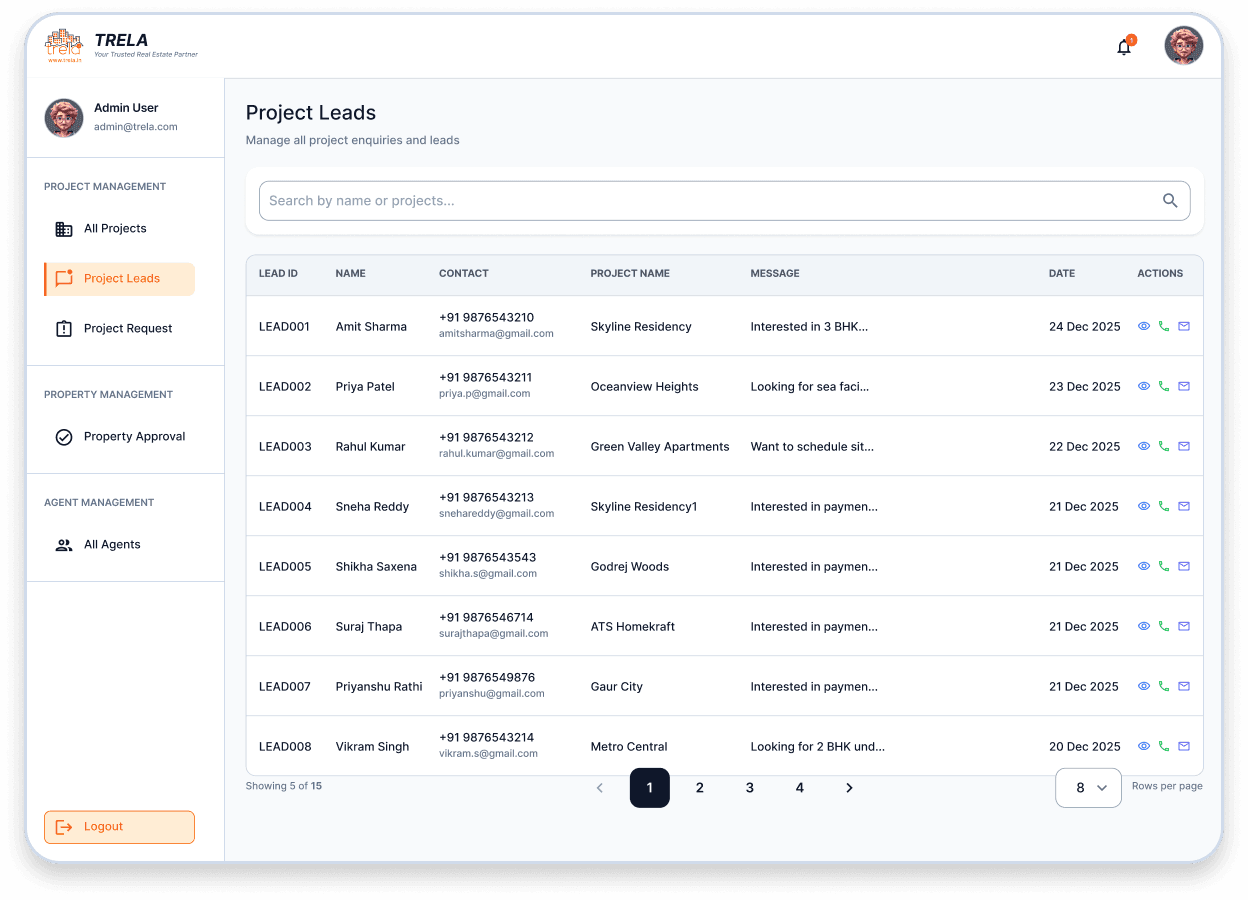
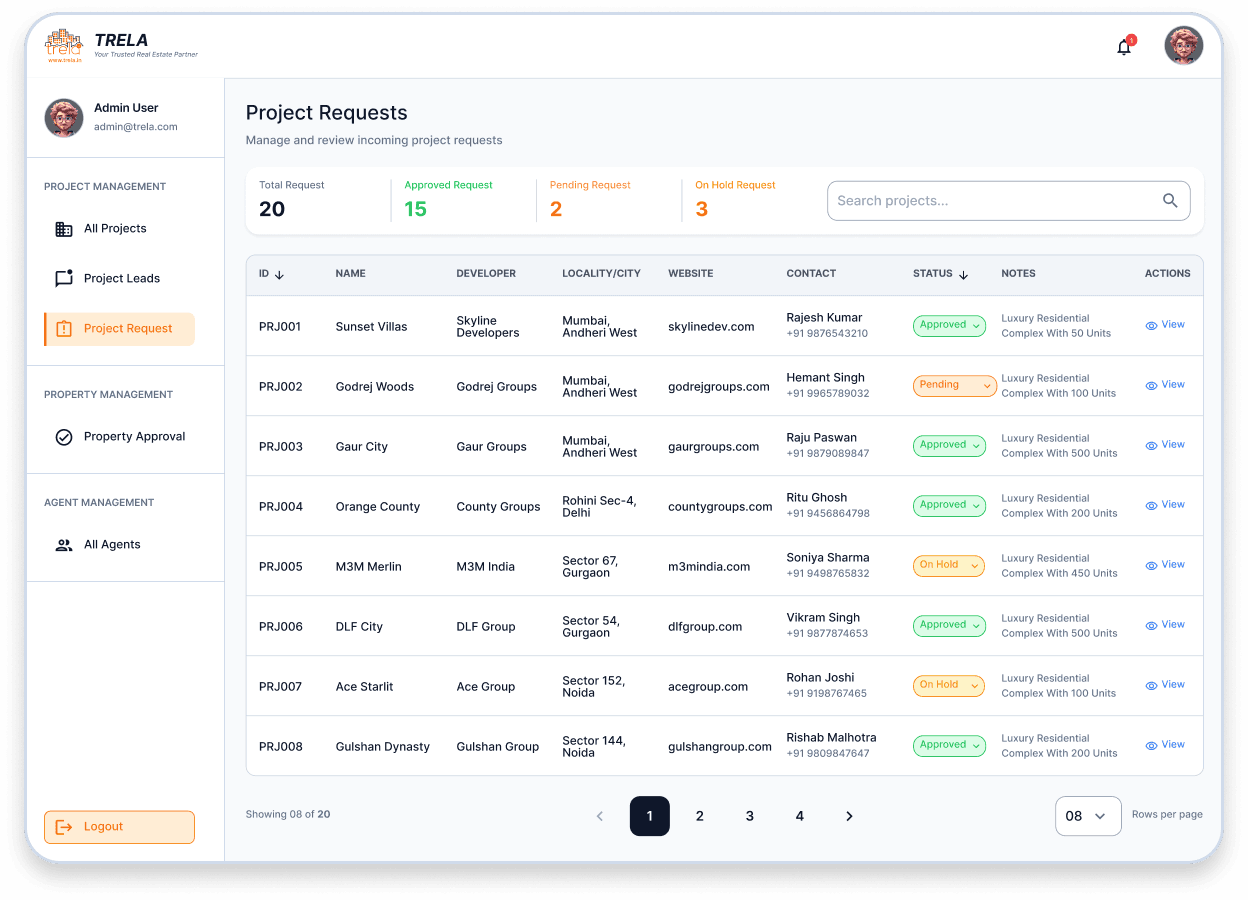
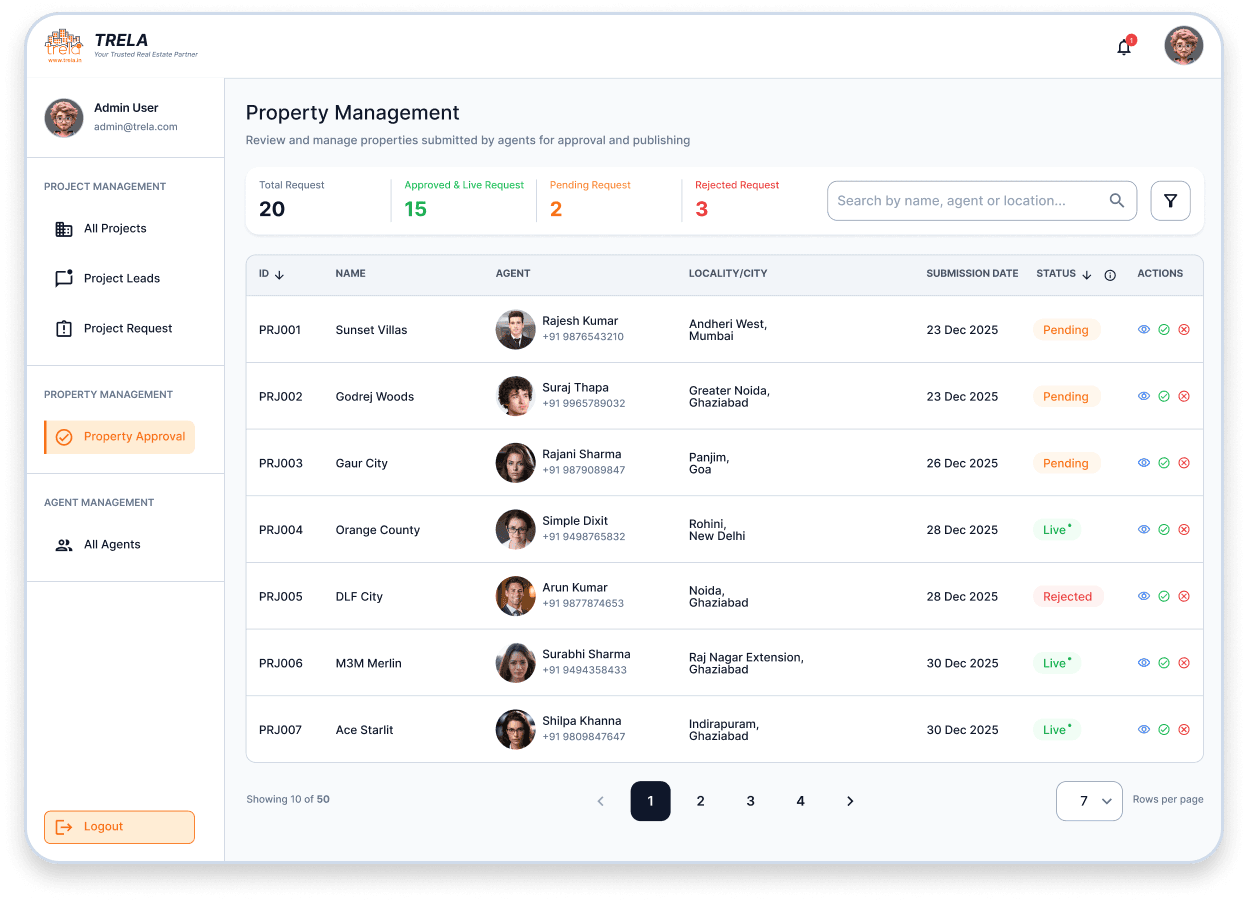
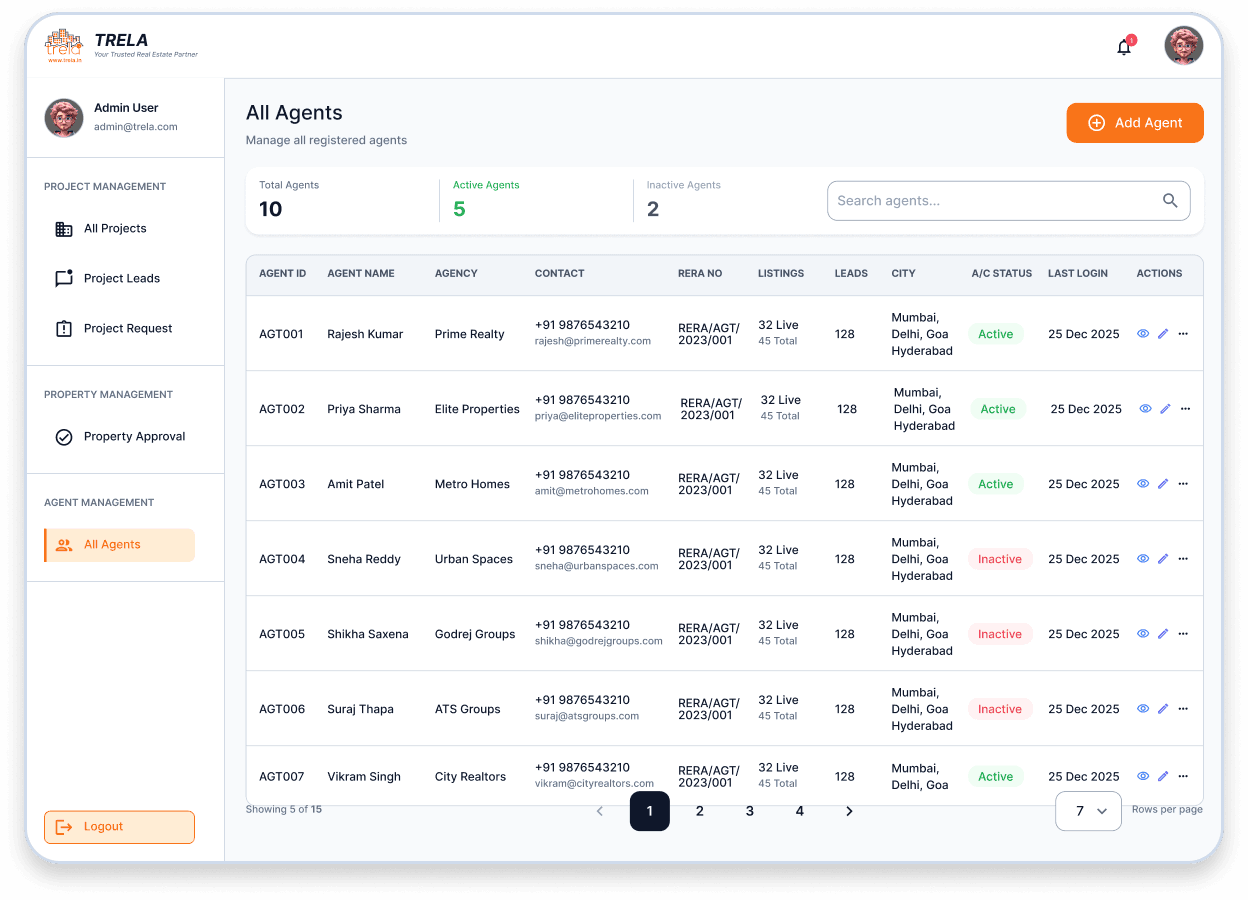
Admin Command Center
Project and agent management, publishing controls, master data, property governance, RERA-related review and lead visibility.
- Role-based access
- Project CRUD and priority
- Media, brochure and RERA documents
- Publish/unpublish controls
- Agent and property administration
Agent Workspace
A broker utility layer built around private inventory and controlled public publishing.
- Private / diary listings
- Secure share links
- Draft → Pending → Published → Archived
- Profile gallery and posts
- Project-to-property selection
Consumer Discovery
A public discovery experience connected directly to structured projects and agent inventory.
- Project and property discovery
- BHK, budget, rent/buy and location filters
- Gallery, brochure and maps
- Agent profiles
- Enquiry and call CTAs
Projects · Agents · Listings
Agent Enablement
From listing contributor to daily platform user.
The agent side was deliberately designed as a workspace rather than a one-time submission form.
Private inventory “Diary”
Agents can maintain off-market or sensitive property information privately, share secure links and decide when inventory is ready to move into a public workflow.
Controlled publishing
Properties move through explicit states, allowing administrative verification before public exposure and supporting re-approval when published information changes.
Agent profile as a destination
Public profiles can contain project associations, media galleries, posts and verified information/context.
Private inventory matching
The product architecture allows consumer search requirements to be connected with agent-held private inventory.
Trust, Compliance & Discovery
Governance and discoverability were designed into the product architecture.
Verification workflow
Publishing states create an auditable path from draft through verification to public availability.
Semantic URLs
Public project and agent routes use human-readable names rather than exposing internal database IDs, with collision handling for duplicates.
Lead routing
Enquiry and call actions connect consumer intent to the relevant project or agent workflow.
Information Architecture
We designed the platform around how real estate inventory actually exists.
The core architectural decision was to stop treating every property as an isolated record and represent the hierarchy that exists in a real project.
- Project
Developer/project data
- Tower
Multiple towers and settings
- Floor
Floor-level configurations
- Flat / Unit
BHK and unit attributes
Structured inventory
- Multiple towers per project
- Multiple floors per tower
- Multiple flat configurations per floor
- Independent unit attributes
- Parking and lift availability
- Area, facing, flooring, balcony and bathroom data
Configuration efficiency
- Bulk-copy tower configurations with controlled exceptions
- Rate-per-square-foot pricing calculation
- Manual pricing override where required
- Project pricing derived from BHK configuration ranges
- Structured location sequence and map coordinates
- Internal notes and remarks
Master Data Governance
We replaced free-form property attributes with reusable product taxonomies.
Real estate platforms quickly accumulate inconsistent values when every form allows users to type whatever they want. Trela was designed around centrally managed master data.
Property
BHK, property type, area unit, flooring, furnishing
Project
Stage, RERA status, developer, amenities, tower data
Location
City → locality hierarchy and map location
Commercial
Pricing units, seller contacts, tower/unit counts
Architecture & Engineering
Technical architecture followed the product model.
The project started with high-level architecture, API contracts, database schemas, cloud planning and project setup before feature implementation.
React Web + Admin
Consumer, agent and administrative experiences with responsive workflows.
Node APIs
Admin, Agent and User API contracts with a microservices-oriented architectural direction.
Structured persistence + AWS
Domain-specific schemas, AWS setup and supporting infrastructure.
Technology stack
Selected for the product’s operating model| Layer | Technology | What it supports |
|---|---|---|
| Application | React Web + Admin | Consumer, agent and administrative experiences with responsive workflows. |
| Backend | Node APIs | Admin, Agent and User API contracts with a microservices-oriented architectural direction. |
| Data & Cloud | Structured persistence + AWS | Domain-specific schemas, AWS setup and supporting infrastructure. |
| Analytics foundation | SQS · Mongo persistence | Internal event-store scope including ingestion endpoint, SQS and Mongo persistence. |
End-to-End Delivery
From discovery to production with one accountable product-engineering team.
- 01
Discovery
Domain & requirements
- 02
Architecture
APIs, data & cloud
- 03
Design
IA & UX/UI
- 04
Development
Frontend, admin, backend
- 05
QA & Feedback
Validation & iteration
- 06
Production
Deployment & delivery
Zolvify's role
- Product discovery and definition
- Information architecture
- Data and domain modelling
- UX/UI design sprints
- Full-stack engineering
- Testing and feedback implementation
- Production deployment
How the product evolved
Implementation exposed deeper domain requirements. The team used those findings to improve the product model before production rather than hard-coding a weak initial abstraction.
Outcomes & System Impact
What changed at the product level.
Single unified data core
Administrative governance, broker inventory and consumer discovery can operate on a shared structured model rather than duplicated records.
Scalable foundation
A high-level concept was transformed into a structured PropTech operating system designed for long-term scaling.
Product-led delivery
Architecture, requirements and workflows evolved together through discovery, implementation and feedback.
What This Demonstrates
Why this matters to a prospective client.
We challenge weak product assumptions
When a business idea looks simple on the surface, we investigate the workflows and data structures underneath it before implementation.
We think in systems, not screens
The same domain model has to serve admin operations, agent workflows and consumer discovery. We design those relationships deliberately.
We work through ambiguity
Requirements can evolve during product development. Our role includes understanding the reason for change and translating it into better architecture.
We own the delivery lifecycle
Discovery, design, engineering, QA, feedback and production are treated as one connected product process.
FAQ
Frequently asked questions about building a PropTech platform.
Can Zolvify build a real estate platform from discovery to production?
Yes. The Trela engagement covered product strategy, information architecture, data modelling, UX/UI, full-stack engineering, testing, feedback-driven changes and production deployment.
How should complex real estate inventory be structured?
For developer projects with multiple buildings and unit configurations, a hierarchy such as Project → Tower → Floor → Flat/Unit provides a stronger foundation than treating every property as an isolated record.
Can a real estate platform support private agent inventory?
Yes. A private diary allows agents to manage off-market or sensitive properties while keeping them out of public discovery until they are ready for controlled publishing and verification.
How can PropTech platforms improve property data quality?
Centralized master data for BHK, property type, location, flooring, facing, project stage and similar attributes reduces inconsistent free-text values and creates reusable filters.
Can a real estate platform support admins, agents and property seekers?
Yes. Trela was structured around separate Admin, Agent and consumer experiences sharing a common product and data architecture.
Why is product discovery important before building a real estate marketplace?
Because marketplace complexity often exists beneath the UI—in permissions, data relationships, workflows, verification, publishing and lead routing. Resolving those rules early reduces the risk of building disconnected features.
Build the product behind the business
Have a complex product idea that needs product thinking and engineering execution?
Zolvify helps turn domain-heavy workflows into scalable digital products—from product discovery and architecture through UX, engineering, QA and production.